

Blog > How to Price Your San Diego Home to Sell Fast (Without Leaving Money on the Table)
How to Price Your San Diego Home to Sell Fast (Without Leaving Money on the Table)
by
Pricing your San Diego home correctly is the single most consequential decision you will make as a seller. Get it right and you sell quickly, competitively, and on your terms. Get it wrong and you lose weeks, negotiating leverage, and ultimately money. Here is everything you need to know to price with confidence in today's market.
The Truth About Pricing a Home in San Diego in 2026
Let me say this clearly at the outset: the San Diego real estate market has fundamentally changed since the frenzy years of 2021 and 2022. Back then, you could price a home almost anywhere within reason and expect a flood of offers within the first weekend. Buyers were writing love letters, waiving inspections, and bidding tens of thousands over asking just to stay competitive.
That market no longer exists.
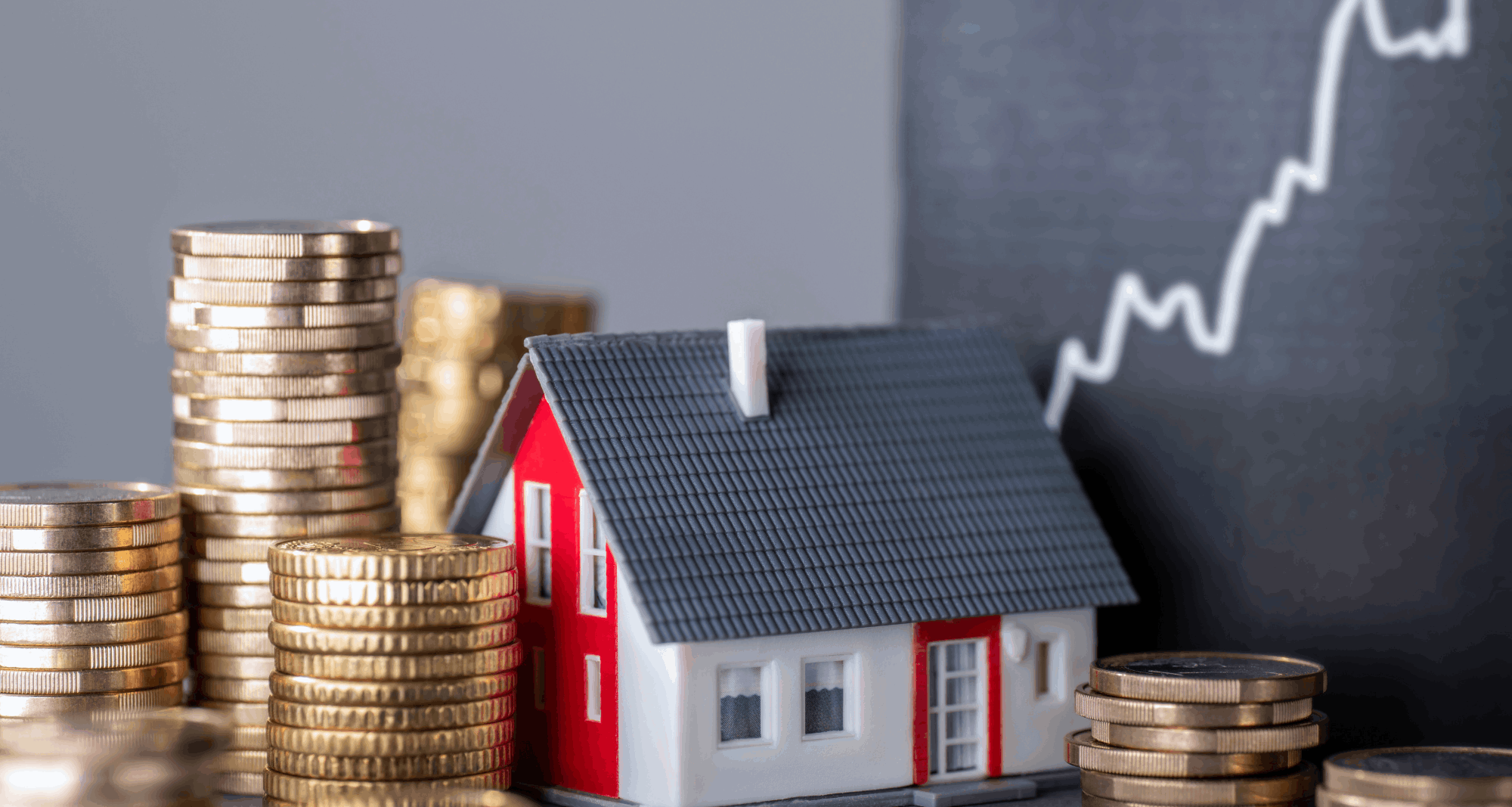
In its place is something healthier, more balanced — and in many ways more rewarding for sellers who approach it strategically. Well-priced, well-presented homes in desirable San Diego neighborhoods are still selling in 7 to 21 days with strong offers. North Park homes have achieved sale-to-list price ratios above 104%. Properties in University City and Allied Gardens are moving with barely 1 month of supply on the market.
But homes that launch overpriced are sitting. Overpriced listings in San Diego now accumulate 50 to 70 or more days on the market before either selling at a significant discount or being withdrawn entirely. The buyers watching them know exactly what is happening — and they use that staleness as leverage.
The difference between a great outcome and a frustrating one in 2026 almost always comes down to one decision: how you priced it from day one.
Why the First Two Weeks on Market Are Everything
In real estate, a listing never gets a second chance to make a first impression. The moment your home hits the MLS, it is seen by every active buyer in your target price range — buyers who have often been searching for months, who have seen every comparable listing in your neighborhood, and who will decide within seconds whether your price makes sense.
The first 7 to 14 days on the market generate the most attention your listing will ever receive. When you come out at the right price, that attention converts into showings, second showings, and offers — often competitive ones. When you come out too high, that window of maximum exposure passes without traction, and the listing starts to age.
Here is what happens when a listing sits:
Buyers grow suspicious. In a market where good homes sell quickly, a home that is still available after 30 or 40 days raises immediate questions. "What's wrong with it?" "Why hasn't anyone bought it?" Even if nothing is wrong — even if it was simply priced too high — that stigma is difficult to shake.
Negotiating leverage shifts. The longer your home sits, the more emboldened buyers become to negotiate on price, repairs, credits, and closing costs. You lose the competitive environment that a correctly priced home generates in its first week.
Price reductions signal weakness. A listing that starts at $1,250,000 and drops to $1,199,000 three weeks later tells every buyer that the seller overreached. Offers that follow a price reduction frequently come in below the new asking price, as buyers assume there is more room to negotiate.
The carrying costs compound. Holding a $1 million San Diego home for an extra month costs you approximately $5,500 to $7,000 in mortgage, taxes, insurance, and utilities — money that disappears without contributing to your sale price.
The seller who prices correctly from day one and sells in two weeks almost always nets more than the seller who prices high, sits for eight weeks, and finally accepts an offer after two price reductions.
What Actually Determines Your Home's Value in 2026
Before we talk about how to price, it's important to understand what the market is actually responding to. Buyers in San Diego in 2026 are data-driven and comparison-focused. They have Zillow, Redfin, and their agent's MLS access on their phones. They know what comparable homes have sold for, and they will spot an overpriced listing immediately.
Your home's market value is determined by:
1. Recent Comparable Sales (Comps)
The closest indicator of your home's value is what similar homes have sold for in the last 60 days, within your specific neighborhood and price tier. Not six months ago. Not during the peak of 2022. The last 60 days.
Comps should be genuinely comparable — similar square footage, bedroom and bathroom count, lot size, condition, and location. A 1,200-square-foot Craftsman bungalow in North Park does not compare to a 2,000-square-foot new construction condo in Mission Valley. Your agent's job is to identify the truly comparable sales and apply them accurately to your specific property.
One critical caution: ignore Zestimates and automated online valuations as your primary pricing tool. These algorithmic estimates use broad averages that miss view premiums, lot orientation, block-level desirability, recent renovation quality, and the dozens of micro-factors that actually drive what a buyer will pay for your specific home. Use them as a rough starting point only, and rely on a professional Comparative Market Analysis (CMA) for your actual pricing decision.
2. Active Competition
What is currently on the market in your neighborhood matters as much as what has already sold. If two very similar homes are listed at $1,150,000 and $1,175,000, pricing your comparable home at $1,250,000 makes you the least attractive option in the eyes of every buyer looking at that price range. Your listing does not exist in a vacuum — it competes directly with everything else available to buyers at any given moment.
3. Condition and Presentation
In 2026, condition directly affects pricing power in a way that did not matter as much during the inventory-starved years. Buyers have choices now. They are punishing friction — deferred maintenance, outdated kitchens, tired landscaping, pet odors, clutter — more than they did when competition was fierce enough to overlook imperfections. A home in excellent, move-in-ready condition commands a meaningful premium over an otherwise comparable home that needs work.
4. Location Within the Neighborhood
San Diego is not one market — it is dozens of micro-markets, and the differences can be profound even within a single ZIP code. A home on a quiet, tree-lined block in North Park and a home on a busy commercial corridor three streets away are not the same product in buyers' eyes. The specific block, the orientation of the lot, the proximity to noise or traffic, the quality of the immediate streetscape — all of these affect value in ways that no algorithm can capture.
5. Market Velocity in Your Specific Submarket
Not all San Diego neighborhoods are performing the same way in 2026. Single-family detached homes in central neighborhoods like North Park, University Heights, and Allied Gardens are showing strong absorption with under 30 days on market and sale-to-list ratios at or above 100%. The condo market is softer countywide, with median attached home prices down 2.2% year-over-year. Luxury properties in La Jolla and Point Loma are seeing extended days on market and significant price negotiation.
Your pricing strategy must reflect your specific submarket — not the San Diego County headline number.
The San Diego Market by the Numbers: Summer 2026
Before your agent builds your CMA, it helps to understand the broad market context you are pricing into:
- Median single-family home price (San Diego County): $1,089,795 as of February 2026, up 2.1% year-over-year — a market that continues to appreciate, just at a more measured pace
- Median attached home (condo/townhome) price: $660,000, down 2.2% year-over-year — a softer segment requiring more careful pricing
- Average days on market: 23 to 37 days across San Diego County, depending on submarket and price tier. Well-priced homes in desirable neighborhoods can still go pending in 7 to 14 days
- Sale-to-list price ratio: Most homes are selling within 1% of their asking price. Correctly priced "hot" homes in competitive neighborhoods can sell 2% to 4% above list. Overpriced homes are selling below asking after price reductions
- Months of supply: 2.2 months countywide for single-family homes — still a seller-leaning market by any standard, but trending toward balance as inventory has risen approximately 14% year-over-year
The data tells a consistent story: this is a good market for sellers who price and prepare strategically. It is a punishing market for sellers who overprice and underprepare.
The Psychology of Pricing: How Buyers Think
Understanding buyer psychology is as important as understanding the data. Here are the psychological principles that should inform your pricing strategy:
Search Filter Thresholds
When buyers set up searches on Zillow, Redfin, or the MLS, they use round-number thresholds — $900,000, $950,000, $1,000,000, $1,100,000, $1,250,000. A home priced at $1,025,000 is invisible to buyers who capped their search at $1,000,000 but appears in the results of buyers searching up to $1,100,000.
Threshold pricing takes advantage of this reality. A home listed at $999,000 often generates significantly more traffic than one listed at $1,020,000, because it captures every buyer searching up to $1,000,000. In many cases, the competitive activity generated by threshold pricing produces offers above the asking price — netting the seller more than a higher initial list price would have.
The "Deal vs. Overpriced" Perception
Buyers in 2026 have been trained to recognize value. When they see a well-presented home priced realistically relative to recent comps, they feel urgency — they know other buyers can see the same thing, and they act. When they see an aspirationally priced home, they scroll past it or visit it casually, fully expecting to lowball.
Stale Listings Invite Skepticism
After 30 to 45 days on the market without going pending, buyers begin to assume the home has problems — even if the only problem was the original price. The psychology of a stale listing works against you in every negotiation that follows. Buyers who do make offers on stale inventory negotiate more aggressively on price, repairs, and credits, fully aware that their leverage has grown.
5 Proven Pricing Strategies for San Diego Sellers
Strategy 1: Price at Fair Market Value
The most reliable strategy for most San Diego sellers in 2026 is to price precisely at fair market value based on the most recent comparable sales — within 1% to 2% of where your agent's CMA lands. This generates strong showing activity in the first two weeks, positions your home as the obvious choice against comparable listings, and creates the conditions for competitive offers without triggering buyer skepticism.
This is not "leaving money on the table." Correctly priced homes sell at or above list price more often than overpriced homes that go through reductions. The seller who prices at $1,150,000 and receives two strong offers at $1,160,000 and $1,175,000 in week one has outperformed the seller who priced at $1,250,000, sat for 60 days, and accepted $1,130,000 after two price cuts.
Strategy 2: Strategic Under-Pricing to Generate Competition
In high-demand micro-markets with constrained supply — neighborhoods like North Park and University Heights where inventory is genuinely tight — a deliberate under-pricing strategy can manufacture competitive dynamics that drive the final sale price above what a "fair value" list price would have achieved.
By pricing 3% to 5% below what the market data suggests your home is worth, you expand the buyer pool (more buyers qualify and get excited at a lower price point), increase showing volume, and create the urgency and FOMO that drives multiple offers. When executed well, the competitive dynamic pushes the final sale price above what you would have achieved at a higher initial price.
This strategy is most effective when: inventory in your submarket is genuinely tight; buyer activity in your price range is strong; your home is well-presented and move-in ready; and your agent has a clear offer-review strategy to manage the competing offers that result.
It is not appropriate when days on market are trending up in your neighborhood, when comparable homes are selling near or below asking, or when your home has features (unusual lot size, architectural distinctiveness, premium location) that are difficult to replicate and deserve to be priced at a premium rather than anchored lower.
Strategy 3: Threshold Pricing
As noted in the psychology section, pricing at or just below a round-number search threshold — $899,000 rather than $915,000; $999,000 rather than $1,025,000; $1,149,000 rather than $1,175,000 — captures a meaningfully larger pool of buyers searching at different price points. Your agent can help you identify which threshold makes sense for your home's actual market value.
Strategy 4: Price High and Reduce
This is the strategy most sellers instinctively want to try — "let's start high and see what happens." In 2026's San Diego market, this approach consistently underperforms. The cost is not just the price reduction itself; it is the lost exposure during the critical first two weeks, the stigma that accumulates with days on market, and the shifted negotiating dynamics that follow. Unless your home has genuinely unique features with no close comparables, the evidence overwhelmingly supports pricing at or near fair value from the start.
Strategy 5: Offer Seller Concessions Instead of Reducing Price
In a market where buyers at every price point are managing affordability concerns driven by 6%+ mortgage rates, offering to contribute toward closing costs or provide a rate buydown can be a more efficient use of your negotiating budget than a list price reduction. A seller credit of $15,000 toward a rate buydown costs you $15,000 but can reduce the buyer's monthly payment by significantly more than $15,000 worth of purchase price reduction would — making the deal workable for more buyers without diluting your stated sale price.
How to Build Your Comparative Market Analysis (CMA)
When you sit down with your Pemberley Realty agent, the pricing conversation will center on a professional CMA — a systematic analysis of the market data that applies to your specific property. Here is how a quality CMA is constructed:
Step 1: Identify truly comparable sales. Your agent pulls closed sales from the MLS within the last 60 days (no older), within your specific neighborhood, for homes that are genuinely similar in size, bedroom/bathroom count, lot type, and condition. Five to ten strong comps is the goal.
Step 2: Adjust for meaningful differences. Your home is not identical to any comp. Adjustments are made for square footage, bedroom and bathroom count, garage, condition, lot size, view, upgrades, and other features that affect value. Each adjustment is grounded in market data — what buyers in your neighborhood have actually paid for those features.
Step 3: Analyze current competition. Your agent reviews all active listings in your price range in the neighborhood. This tells you what buyers are comparing your home to right now.
Step 4: Assess market velocity. How quickly are comparable homes going pending? Are they selling above or below asking price? Is inventory rising or falling? These velocity metrics tell you how aggressive or conservative your pricing should be.
Step 5: Identify a pricing range. A well-constructed CMA produces a defensible price range — not a single number. Your agent will recommend a specific list price within that range based on your goals (maximize speed, maximize net proceeds, or balance both), your home's condition and presentation, and current market dynamics.
Pre-Listing Preparation: How Condition Affects Your Pricing Power
No amount of strategic pricing will substitute for a home that is well-prepared. In the current San Diego market, where buyers have options and are making careful comparisons, condition directly translates to pricing power.
Invest in What Returns Value
Fresh interior and exterior paint is consistently one of the highest-return pre-listing investments — typically costing $3,000 to $8,000 and returning several times that in buyer perception and final sale price.
Refinished hardwood floors are particularly important in older North Park and University Heights homes where original wood floors are a selling feature. Clean, refinished floors transform the presentation of a home.
Professional staging continues to deliver measurable results in the San Diego market. Staged homes generate better online engagement, more showings, and consistently stronger offers — particularly in the $800,000+ price range where buyers expect a level of polish and presentation. Physical staging outperforms virtual staging decisively; buyers who encounter a digitally staged listing in person feel the disconnect immediately.
Professional photography and video are non-negotiable in 2026. The vast majority of home searches begin online, and the quality of your listing photos determines whether buyers schedule a showing or keep scrolling. At Pemberley Realty, professional photography is standard on every listing we represent.
A pre-listing inspection is one of the most powerful tools available to San Diego sellers, and it is still underutilized. For $400 to $600, you get the same report a buyer's inspector would produce — before you list. This allows you to address meaningful issues proactively (or disclose them transparently and price accordingly), so that when a buyer's inspection report comes back during escrow, there are no surprises that derail the deal or give the buyer ammunition to renegotiate.
Know What Not to Spend On
Not every improvement returns its cost at resale. Full kitchen remodels, master bathroom renovations, and major landscaping projects rarely generate dollar-for-dollar returns in the current market — especially if your goal is to sell within 60 to 90 days. Work with your agent to identify which investments will move the needle on price and which will simply reduce your net proceeds.
Timing Your Listing in San Diego
Pricing matters most, but timing matters too. A few principles for summer 2026:
Summer is prime selling season. Families motivated to be settled before the school year create a reliable surge in buyer activity from June through August. That demand supports both pricing and timeline.
Watch mortgage rate movements. In February 2026, when rates briefly dipped below 6%, San Diego sales volume jumped 22% in a single month. Every meaningful rate dip triggers a wave of buyer activity. Sellers who have their home ready to launch quickly when rates drop are positioned to capture that demand at its peak.
The first Tuesday through Thursday after going live matters. Most San Diego buyers tour on weekends, but listing early in the week gives you maximum digital exposure before the weekend showing rush. Work with your agent on the optimal day and time to go live.
Avoid major holidays and peak vacation periods. Buyer activity in San Diego dips meaningfully the week of July 4th and around Labor Day. Plan your launch to avoid these windows unless your timeline requires otherwise.
What Pemberley Realty Does Differently for Sellers
Pricing a San Diego home correctly requires hyperlocal knowledge that no algorithm can provide. It requires knowing which blocks in North Park command a premium and which are priced more cautiously. It requires understanding the seasonal rhythms of buyer demand in University Heights, the inventory dynamics in each price tier, and the specific features San Diego buyers are paying up for right now.
At Pemberley Realty, our pricing process is built on current MLS data, direct knowledge of every comparable sale in our neighborhoods, and years of experience reading what buyers are actually responding to in the market. We don't give you a number designed to win your listing — we give you a number designed to win you the best possible outcome.
Our North Park office at 4645 Park Blvd is in the heart of the neighborhood we know best. Our Del Mar office at 1237 Camino Del Mar serves the coastal and luxury market. In both locations, our sellers consistently achieve outcomes that reflect accurate pricing, professional marketing, and strategic representation — not guesswork and hope.
Ready for a Free Home Valuation?
If you are thinking about selling your San Diego home — whether now or in the next six months — the single best first step is a professional Comparative Market Analysis from a broker who knows your specific neighborhood.
We offer complimentary home valuations with no obligation. We will walk you through the current data for your specific property, give you an honest assessment of what your home is likely to sell for in today's market, and help you understand what steps would maximize your outcome.
Call us: 619.598.1424 | 619.778.0577
Email: roxanne@pemberleyrealty.com
Visit us: 4645 Park Blvd, San Diego, CA (North Park) | 1237 Camino Del Mar Ste D (Del Mar)
Website: pemberleyrealty.com
Committed to Excellence Because We Care.
Frequently Asked Questions: Pricing Your San Diego Home
How do I price my home to sell fast in San Diego?
Start with a professional Comparative Market Analysis using closed sales from the last 60 days in your specific neighborhood and price tier. Price at or within 1% to 2% of fair market value — not aspirationally above it. In high-demand micro-markets like North Park, a deliberate slight under-pricing strategy can generate competitive offers that push the final price above what a higher list price would have achieved.
What is the biggest pricing mistake San Diego sellers make?
Anchoring to what a neighbor's home sold for in 2021 or 2022 and pricing based on that rather than current market data. Today's pricing is set by what comparable homes have closed for in the last 60 days — not what the market was doing during the pandemic frenzy. Buyers have real-time data and will immediately recognize an overpriced listing.
How long does it take to sell a home in San Diego in 2026?
Well-priced homes in desirable neighborhoods are going pending in 7 to 21 days. The average across San Diego County is currently 23 to 37 days depending on the submarket. Overpriced listings are sitting 50 to 70+ days before either selling at a discount or being withdrawn. From accepted offer to close, escrow typically runs an additional 30 to 45 days.
Should I price my San Diego home high to leave room to negotiate?
This strategy consistently underperforms in the current market. Overpriced homes lose their critical first-week exposure, accumulate days on market, and ultimately sell for less than correctly priced homes — after the additional stress, carrying costs, and negotiating leverage lost during the waiting period.
How much does staging affect the sale price of a San Diego home?
Meaningfully. Professionally staged homes in San Diego's $800,000+ price range generate stronger online engagement, more showings, and consistently better offers than unstaged comparable homes. The investment in professional staging typically returns several times its cost in final sale price — particularly in character neighborhoods like North Park and University Heights where buyers are purchasing a lifestyle as much as a home.
Does Pemberley Realty offer free home valuations?
Yes. We provide complimentary Comparative Market Analyses for San Diego homeowners considering selling — with no obligation. Contact us at 619.598.1424 or roxanne@pemberleyrealty.com to schedule yours.
GET MORE INFORMATION
