

Blog > ADU in San Diego: What Homeowners Need to Know About Building an Accessory Dwelling Unit
ADU in San Diego: What Homeowners Need to Know About Building an Accessory Dwelling Unit
by
An accessory dwelling unit can generate $2,000 to $3,500 per month in rental income, add $150,000 to $375,000 to your property's appraised value, and pay for itself within five to ten years. San Diego is one of the most ADU-friendly cities in California. But before you break ground, there is a lot you need to understand. This is the complete guide.
Why Every San Diego Homeowner Should Be Thinking About an ADU Right Now
If you own a home in San Diego — particularly in North Park, University Heights, Normal Heights, South Park, or any of the central or coastal neighborhoods — there is a very good chance your property can support an accessory dwelling unit. And if it can, you are sitting on one of the most powerful real estate investment opportunities available in California today.
An ADU, also called a granny flat, in-law unit, backyard cottage, or companion unit, is a fully self-contained secondary dwelling on the same lot as your primary residence. It has its own entrance, kitchen, bathroom, and living space. It can be rented to a long-term tenant, used to house a family member, or — depending on your goals and the regulations in your area — operated as a short-term rental.
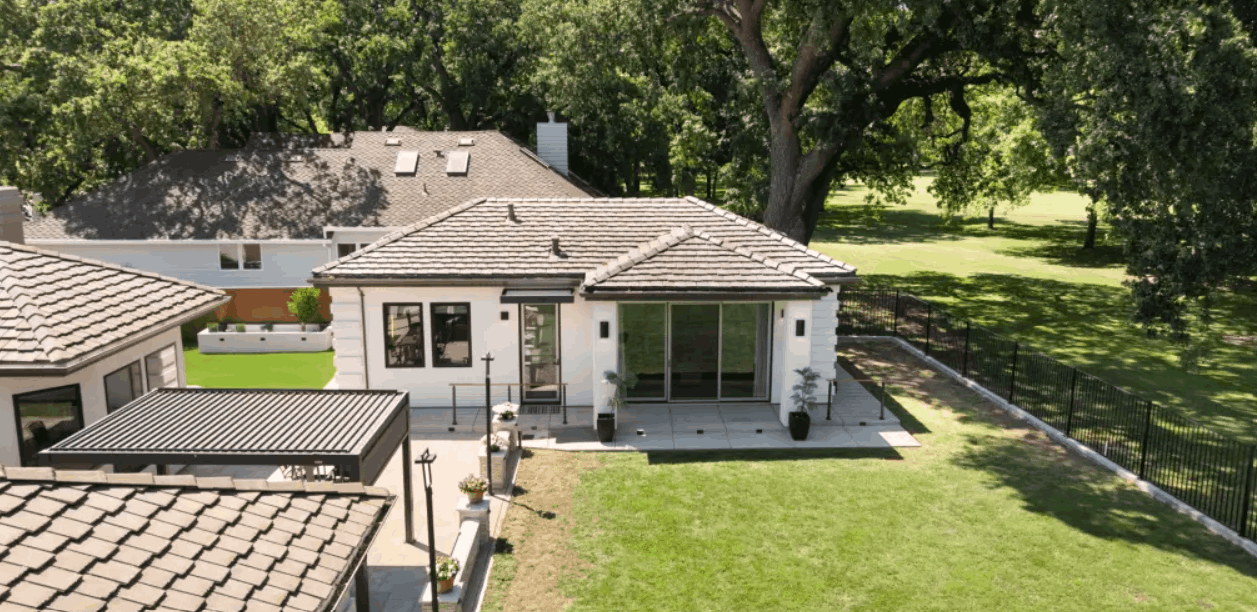
San Diego issues more ADU permits per capita than almost any other city in the United States. That is not an accident. The city has actively streamlined its approval process, reduced fees, and aligned with California state law to make ADU construction faster and more accessible than at any point in recent memory.
In 2026, the combination of a persistent rental housing shortage, strong rental rates, simplified permitting, favorable financing options, and meaningful property value uplift makes the case for ADUs more compelling than ever. Here is what you need to know.
What Is an ADU? The Four Main Types in San Diego
Before diving into the numbers and regulations, it helps to understand the different forms an ADU can take — because the right choice for your property depends heavily on your lot, your existing structures, your goals, and your budget.
1. Detached ADU
A completely separate structure built on your lot, independent from the main house. Think backyard cottage, garden suite, or standalone guest house. Detached ADUs offer maximum design flexibility, the greatest privacy for both the homeowner and the tenant, and — importantly — the strongest impact on resale value and rental income potential. They are also the most expensive to build because you are constructing a complete structure from the ground up, including foundation, framing, roof, utilities, and all finishes.
Best for: Homeowners with usable rear or side yard space who want maximum rental income and long-term property value uplift.
2. Attached ADU
An addition to the existing primary home that functions as a separate unit with its own entrance, kitchen, and bathroom. Shares at least one wall with the main house. Generally less expensive than a fully detached structure because some framing, roofing, and utility connections can be shared or extended from the existing home.
Best for: Homeowners with limited yard space but room to expand the footprint of the existing structure.
3. Garage Conversion ADU
Converting an existing attached or detached garage into a livable dwelling unit. The most cost-effective path to an ADU because the structural shell — foundation, walls, and roof — already exists. Significantly reduces foundation and framing costs compared to new construction. The tradeoff is the loss of your garage space and some limitations on layout flexibility.
Best for: Homeowners who want to maximize affordability and speed to completion, particularly in neighborhoods like North Park and Hillcrest where lots are smaller and new detached construction is less feasible.
4. Junior ADU (JADU)
A smaller secondary unit created entirely within the walls of the existing primary home — converting an unused bedroom, bonus room, or interior space into a self-contained unit with its own entrance and kitchen facility. Maximum size of 500 square feet. The most affordable ADU type by a significant margin, often costing $20,000 to $60,000 depending on the extent of the conversion. A JADU must share a bathroom with the primary dwelling or have its own, and — unlike standard ADUs — owner-occupancy is still required for JADUs under most configurations.
Best for: Homeowners on a limited budget, those with large homes and underutilized interior space, or those who want to add rental income while maintaining the closest proximity to a tenant.
San Diego ADU Rules and Regulations in 2026
California's ADU laws have been dramatically simplified over the past several years, and San Diego has been at the forefront of implementing those changes. Here is what the regulatory landscape looks like in 2026:
How Many ADUs Can You Build?
On a single-family lot: California law and San Diego's Municipal Code allow a single-family property to have one standard ADU and one JADU simultaneously. That means it is possible to have your primary home, a detached ADU, and a Junior ADU all on the same lot — three units total.
On a multifamily lot: The rules are even more generous. Up to eight detached ADUs may be permitted on a multifamily lot (subject to the condition that the number of detached ADUs cannot exceed the number of existing units on the lot). Additionally, existing non-habitable space — storage rooms, boiler rooms, garages, basements, attics — can be converted to ADUs, and these conversions are in addition to the allowed new detached ADUs.
Size Limits
- Detached ADU: Up to 1,200 square feet. The City of San Diego does not tie the ADU size limit to the size of the primary home, which is more generous than many other jurisdictions.
- Attached ADU: Up to 50% of the primary dwelling's square footage, capped at 1,200 square feet.
- JADU: Maximum 500 square feet, entirely within the existing primary structure.
- Minimum size: 150 square feet for any ADU.
- FAR exemption: ADUs up to 800 square feet are exempt from floor area ratio (FAR) requirements, meaning you can build an ADU of this size even if your lot is already at its maximum coverage.
Setbacks
The City of San Diego requires a 4-foot rear and side setback for most detached ADUs. ADUs must comply with the front yard setbacks of the underlying zone, though California state law requires that front yard setbacks cannot prevent the construction of an ADU of at least 800 square feet. In Very High Fire Hazard Severity Zones, the rear setback requirement increases to 4 feet with additional fire-resistant construction requirements.
For garage conversions, the existing setbacks of the structure apply — meaning many existing garages that are already within setback limits can be converted without setback complications.
Parking
No replacement parking is required for garage conversions in San Diego. This is a significant simplification — previously, converting a garage meant providing replacement parking elsewhere on the lot. That requirement has been eliminated, removing one of the biggest practical barriers to garage conversion ADUs in dense central neighborhoods where alternative parking space simply does not exist.
For new detached ADUs, parking requirements vary by location and proximity to transit, but state law significantly limits local jurisdictions from imposing parking requirements that make ADU construction impractical.
Height
ADUs are generally limited to the height of the primary dwelling or the applicable zone height limit, whichever is lower. Two-story ADUs are permitted in many zones. Roof decks are generally permitted but must meet height restrictions and cannot encroach into required setbacks.
Owner-Occupancy
Owner-occupancy is no longer required for standard ADUs as of 2025. You can rent out both the primary home and the ADU without living on the property. This rule change has made ADUs dramatically more attractive to investors and homeowners who may be relocating but want to retain the rental income potential of their San Diego property.
Note: JADUs retain owner-occupancy requirements in most configurations, though Assembly Bill 1154 (effective January 1, 2026) now exempts JADUs that have their own separate bathroom from owner-occupancy requirements — matching the rules that already applied to detached ADUs.
Permit Timeline
Under California law, ADU permit applications must be approved or denied within 60 days of a complete application. San Diego's Development Services Department has been consistently meeting this timeline. This predictability is a significant improvement from earlier years when ADU approvals could drag on for months. Coastal permits, septic approvals, and grading reviews may extend this timeline for properties in relevant zones.
The review process is ministerial — meaning no discretionary hearing, no design review board, no planning commission approval is required for conforming ADU applications. You submit, they review for compliance with objective standards, and they approve or provide specific corrections. Subjectivity and community opposition are not factors.
New in 2026: AB 1033 — Separate Sale of ADUs
One of the most consequential recent changes affecting San Diego ADU owners is the implementation of Assembly Bill 1033, which allows ADUs to be sold separately from the primary dwelling as condominium units. San Diego County adopted AB 1033 on March 4, 2026, with the implementation effective April 4, 2026. This means that, for the first time in most circumstances, an ADU in unincorporated San Diego County can be sold as a standalone property — opening up a new category of exit strategy for ADU owners and expanding the pool of potential buyers for properties with existing ADUs.
The City of San Diego's opt-in process for AB 1033 is still being finalized. Contact our team for the most current status on this developing change.
ADU Construction Costs in San Diego in 2026
Building costs in San Diego remain among the highest in California, reflecting the region's high labor rates, coastal regulatory requirements in some areas, and elevated material costs. Here is a realistic breakdown by ADU type:
Junior ADU (JADU): $20,000 – $60,000
The most accessible entry point. If you have an unused bedroom or large bonus room that can be converted, costs are primarily in permitting, kitchenette installation, entrance modification, and finishing work. For many homeowners, this is the fastest path to rental income with the lowest upfront investment.
Garage Conversion ADU: $70,000 – $180,000
The shell exists, which eliminates foundation and most framing costs. Primary expenses are insulation, drywall, HVAC, plumbing for kitchen and bathroom, electrical panel upgrades, windows, flooring, and finishes. Above-garage ADUs (converting the space above an existing garage into a second-story unit) cost more — typically $150,000 to $250,000 — because they require structural reinforcement and a staircase but preserve your ground-level parking.
Attached ADU: $150,000 – $280,000
More complex than a garage conversion since it involves new construction tied to the existing structure. Structural planning, permitting, utility extension, and full interior finishing all contribute to higher costs than a garage conversion.
Detached ADU (New Construction): $200,000 – $400,000+
A full standalone structure from the ground up. In North Park, cost for a 750-square-foot detached ADU runs approximately $240,000 to $275,000 including permits and utility connections. Coastal neighborhoods like La Jolla, Del Mar, and Pacific Beach add 15% to 25% to construction costs due to stricter coastal building requirements, higher labor demand, and more complex permitting.
Additional Costs to Budget For
Beyond construction, homeowners frequently underestimate these line items:
- Design and architecture: $5,000 to $15,000 for drawings, structural engineering, and Title 24 energy compliance
- Permits and fees: $3,500 to $12,000 for plan check, building permit, school impact fees, and utility connections
- Utility connections: $5,000 to $15,000 for water, sewer, and electrical service connections (California law prohibits impact fees on ADUs under 750 square feet, which can save homeowners $10,000 to $30,000)
- Soil and geotechnical report: $2,000 to $5,000 for new detached construction
- Landscaping and site work: Variable depending on your lot
Cost per square foot: In 2026, San Diego ADU construction runs $250 to $450 per square foot for new detached units, with garage conversions toward the lower end and premium coastal builds toward the high end.
Contingency: Always budget a 10% to 20% contingency. Site conditions — soil stability, utility access, slope, existing structure condition — can shift costs meaningfully, and materials pricing continues to fluctuate.
ADU Rental Income and Return on Investment
This is the calculation that makes ADUs so compelling for San Diego homeowners.
What Can You Rent an ADU For?
San Diego's rental market is persistently strong. Low vacancy rates, year-round demand driven by military, biotech, and university populations, and a structural housing shortage keep rental rates elevated. Here is what ADUs are realistically renting for across different parts of San Diego County in 2026:
- Studio or one-bedroom ADU (under 500 sq ft): $1,600 to $2,200 per month, depending on location and finishes
- One-bedroom ADU (500 to 700 sq ft): $1,900 to $2,700 per month in inland neighborhoods; $2,200 to $3,000 per month in coastal or near-coastal communities
- Two-bedroom ADU (700 to 1,200 sq ft): $2,500 to $3,500 per month across most of San Diego County, with coastal markets pushing the top of that range higher
In central neighborhoods like North Park and University Heights, well-finished one-bedroom ADUs consistently rent in the $2,000 to $2,500 per month range. In coastal neighborhoods like Del Mar, La Jolla, and Pacific Beach, rates for comparable units reach $2,500 to $3,500 per month.
The ROI Math
Let's run the numbers on a representative example:
Scenario: Detached one-bedroom ADU in North Park. Construction cost: $250,000. Monthly rent: $2,300.
- Annual gross rental income: $27,600
- Annual property tax increase (approximately 1.1% of $250,000 improvement): approximately $2,750
- Annual insurance and maintenance (estimated): approximately $2,000
- Annual net operating income: approximately $22,850
- Gross payback period: approximately 9 to 11 years
After break-even, that rental income becomes ongoing cash flow on top of the property value increase the ADU has already generated. And the property value uplift often happens immediately upon completion.
How Much Does an ADU Add to Property Value?
San Diego appraisers increasingly use the income approach to value ADU properties — meaning they factor in the rental income potential when determining value. The standard valuation methodology yields approximately 100x to 150x monthly rent in added appraised value.
A detached ADU renting at $2,500 per month adds approximately $250,000 to $375,000 in appraised property value. On a construction cost of $250,000 to $300,000, that approaches a 1:1 return on the construction cost — in addition to the ongoing income stream. This makes well-built, permitted ADUs one of the highest-return construction investments available in the San Diego market.
The key qualifier is "legal and permitted." An unpermitted ADU adds risk, not value — it can complicate financing, trigger code enforcement, and create liability. Always permit your ADU properly.
Proposition 13 Protections
California's Proposition 13 limits property tax reassessments. When you build an ADU, the county assessor adds the ADU's assessed value to your existing base assessment — but your existing home's assessed value is not reassessed. A $280,000 ADU might add roughly $3,000 to $3,500 per year in property taxes. That is well below the rental income potential of $24,000 to $40,000 per year in gross rent.
Additionally, California's SB 1164 provides property tax exemptions for up to 15 years on new ADUs for income-qualifying homeowners — reducing carrying costs during the critical first decade when owners are recouping their construction investment.
Financing Your ADU: What Options Are Available
Most homeowners fund ADU construction through one of several approaches:
HELOC (Home Equity Line of Credit)
The most common financing method for homeowners with significant equity in their San Diego properties. A HELOC provides a revolving credit line secured by your home equity. Rates are variable and currently running in the 7% to 9% range, but the flexibility and accessibility make HELOCs the go-to choice for many homeowners.
Cash-Out Refinance
Refinancing your existing mortgage and taking out additional cash above your current loan balance. With current mortgage rates around 6.33%, this works best for homeowners who either have no existing mortgage or are refinancing from a higher rate.
SDHC ADU Finance Program
The San Diego Housing Commission offers ADU construction loans of up to $250,000 at just 1% interest for income-qualified homeowners earning no more than 80% of Area Median Income (approximately $97,000 per year for a family of four). At 1% interest versus the 7% to 9% market rate, the financing cost savings alone can be $30,000 to $60,000 over the loan term. If you qualify, this is by far the best financing option available.
CalHFA ADU Grant Program
California's Housing Finance Agency has offered forgivable pre-development grants of up to $40,000 for qualified homeowners to cover ADU design, engineering, and permitting costs — the soft costs that often surprise homeowners before construction even begins. Check current CalHFA availability, as funding levels vary.
Construction Loans
Short-term financing that converts to a permanent mortgage upon project completion. More complex to execute than a HELOC but useful for homeowners without sufficient existing equity.
Fannie Mae Income Counting (March 2026 Update)
A significant 2026 change: Fannie Mae now allows lenders to count projected ADU rental income toward qualifying income — up to 30% of total income — even before the unit is rented. This meaningfully expands what homeowners can borrow when refinancing to fund ADU construction. Ask your lender specifically about this rule if you are considering a cash-out refinance to fund your ADU.
The ADU Permit Process: Step by Step
San Diego's permitting process for ADUs, while streamlined compared to earlier years, still requires careful preparation. Here is the sequence:
Step 1: Feasibility Assessment Before spending money on plans, confirm your lot can support an ADU. Check your zoning designation at the City of San Diego's Zoning and Parcel Information Portal (ZAPP). Confirm setbacks, lot coverage, height limits, and whether you are in the Coastal Overlay Zone, a fire hazard zone, or any other overlay that adds requirements.
Step 2: Design and Plans Engage an architect or ADU design firm to produce your permit package: site plan showing the lot with all structures and setbacks; floor plans for the ADU; elevations from all four sides; foundation plan for new construction; roof plan; and Title 24 energy compliance documentation. Professionally drafted plans produced with CAD software are strongly recommended — they are easier for reviewers to read and significantly less likely to generate correction requests that delay approval.
Step 3: Submit to San Diego DSD Submit your complete application through the City of San Diego's ePermits portal. The City must approve or deny within 60 days of a complete application. Incomplete applications reset the clock — a complete, professionally prepared submission is your best tool for hitting the 60-day target.
Step 4: Plan Check and Corrections The City's Development Services Department reviews your plans for compliance with building code, zoning, and fire requirements. If corrections are required, respond promptly and thoroughly. Most straightforward ADU applications require one round of corrections at most.
Step 5: Permit Issuance and Construction Once approved, you receive your building permit and can begin construction. Your contractor will schedule inspections at key construction milestones — foundation, framing, rough electrical and plumbing, insulation, and final inspection.
Step 6: Final Inspection and Certificate of Occupancy Upon passing final inspection, the City issues a Certificate of Occupancy — the document that makes your ADU legal, rentable, and valuable to appraisers and future buyers. This is the document that converts your construction investment into property value.
Typical timeline from application to move-in ready: 6 to 12 months, depending on design complexity, plan check volume at DSD, contractor availability, and construction scope.
ADUs and San Diego Real Estate: What Sellers and Buyers Should Know
For Sellers
A legal, permitted, income-producing ADU is one of the most powerful value-adding features a San Diego home can have. It expands your buyer pool significantly — to investors, house hackers (buyers who want to offset their mortgage with rental income), multi-generational families, and buyers who recognize the income stream's value. Properties with existing ADUs are consistently appraised higher and typically command a premium in the market over otherwise comparable properties without them.
At Pemberley Realty, we regularly advise sellers on whether investing in an ADU before listing — or even legalizing an unpermitted existing unit — is worth the time and cost given their timeline and goals. Sometimes it is. Sometimes it is better to disclose the ADU potential and let the buyer capture that upside. The answer depends on your specific property, timeline, and the current market dynamics in your neighborhood.
For Buyers
When evaluating a San Diego property, always ask: does this lot have ADU potential? In neighborhoods like North Park, University Heights, Normal Heights, and South Park, ADU feasibility can meaningfully change the long-term financial calculus of a purchase. A home that would otherwise be a stretch financially may become very manageable with $2,000 to $2,500 per month in rental income from a backyard ADU.
At Pemberley Realty, we help buyers evaluate ADU potential as part of our standard property analysis — looking at lot size, existing structures, zoning, setback compliance, and utility access to give you a realistic sense of what is buildable before you make an offer.
Common ADU Questions San Diego Homeowners Ask
Do I need to live on the property to rent my ADU? No. As of 2025, owner-occupancy is no longer required for standard ADUs in California. You can rent both the primary home and the ADU without living on the property. JADUs have different rules — owner-occupancy is generally required unless the JADU has its own separate bathroom, in which case AB 1154 (effective January 1, 2026) exempts it.
Can I use my ADU as a short-term rental (Airbnb/VRBO)? San Diego requires a short-term rental (STR) license, and the number of STR licenses available in some zones is limited. If you plan to use your ADU as a short-term rental, verify current STR regulations for your specific area before designing or building with that use in mind. STR regulations in San Diego are subject to ongoing change.
What about HOAs? California state law limits an HOA's ability to prohibit ADU construction. However, HOAs may still impose design standards and architectural review processes. If your property is in an HOA, review your CC&Rs and consult with a knowledgeable broker before finalizing plans.
Can I sell my ADU separately from my main home? In unincorporated San Diego County, yes — as of April 4, 2026, following the County Board of Supervisors' adoption of AB 1033. The City of San Diego is still finalizing its opt-in process. This is a rapidly evolving area of law; contact our team for the most current status.
Does building an ADU trigger a property tax reassessment on my entire home? No. Under Proposition 13, only the newly constructed ADU is assessed. Your primary home's existing assessed value is protected.
What if I have an existing unpermitted unit? California's ADU amnesty provisions have made it easier to legalize unpermitted units that were built before January 1, 2020. San Diego's process for legalizing existing unpermitted structures has been streamlined significantly. Legalizing an existing unit avoids the full construction cost while converting an unlicensed liability into a permitted, income-producing, value-adding asset. Contact our team or a qualified contractor for a feasibility assessment.
Ready to Explore ADU Potential on Your San Diego Property?
An ADU is not the right move for every homeowner at every moment. It requires upfront capital, a realistic timeline, the right lot configuration, and a clear sense of your goals — whether that is rental income, multi-generational living, increasing property value, or a combination. But for the right homeowner, it may be the single best return on investment available in San Diego real estate today.
At Pemberley Realty, we help our clients evaluate ADU potential as part of a complete understanding of their property's value and possibilities. Whether you are buying a home and want to understand its development potential, selling a property and wondering whether to invest in an ADU first, or simply exploring what your existing home is capable of — we are here to help you think through it clearly.
Call us: 619.598.1424 | 619.778.0577
Email: roxanne@pemberleyrealty.com
Visit us: 4645 Park Blvd, San Diego, CA (North Park) | 1237 Camino Del Mar Ste D (Del Mar)
Website: pemberleyrealty.com
Committed to Excellence Because We Care.
Frequently Asked Questions: ADUs in San Diego
What is an ADU in San Diego? An accessory dwelling unit (ADU) is a self-contained secondary dwelling on the same lot as a primary residence, with its own entrance, kitchen, and bathroom. Also called granny flats, in-law units, or backyard cottages, ADUs are legal in all residential zones in San Diego that permit residential uses.
How much does it cost to build an ADU in San Diego in 2026? Costs range from $20,000 to $60,000 for a Junior ADU (JADU) conversion, $70,000 to $180,000 for a garage conversion, and $200,000 to $400,000 or more for a new detached ADU. The City of San Diego permit fees range from $3,500 to $12,000. California law prohibits impact fees on ADUs under 750 square feet, saving homeowners $10,000 to $30,000 in some cases.
How much can I rent an ADU for in San Diego? A one-bedroom ADU in central San Diego neighborhoods like North Park and University Heights rents for $2,000 to $2,500 per month in 2026. Coastal neighborhoods like Del Mar and La Jolla can reach $2,500 to $3,500 per month for comparable units.
How much value does an ADU add to a San Diego home? San Diego appraisers use the income approach to value ADU properties, yielding approximately 100x to 150x the monthly rent in added value. A unit renting for $2,500 per month adds approximately $250,000 to $375,000 to the appraised property value.
What are the ADU setback requirements in San Diego? Detached ADUs in the City of San Diego require a 4-foot rear and side setback. ADUs must meet front yard setbacks for the underlying zone, though state law ensures front yard setbacks cannot prevent construction of an ADU of at least 800 square feet.
Does San Diego require parking for ADUs? No replacement parking is required for garage conversions. Parking requirements for new detached ADUs vary by location and transit proximity, but state law significantly limits local restrictions. Many San Diego ADU projects require no additional parking.
How long does ADU permitting take in San Diego? The City of San Diego must approve or deny a complete ADU application within 60 days under California law — and has been consistently meeting this timeline. Total time from application submission to occupancy, including construction, typically runs 6 to 12 months.
Can I build an ADU in North Park or University Heights? Yes, in most cases. These central San Diego neighborhoods are highly suitable for ADU construction — zoned for residential use, with older housing stock that often has garage conversion potential, and lot configurations that can support detached units. Contact Pemberley Realty for a property-specific assessment.
GET MORE INFORMATION
